ANGELA WATSON
From the Obedience Ring to your Leadership Team.
Unleashing Peak Performance Through Clarity, Communication, and Intent.
High performance isn’t about working harder; it’s about mastering communication, pressure, and intention.

As an elite sports dog handler, trainer, and Crufts team deputy manager, I spend my weekends coaching canine athletes to win championship titles under the highest stakes. During the week I bring those exact behavioural insights, clear communication frameworks, and pressure-management strategies into the corporate, healthcare, and educational worlds.
Whether I’m coaching a sports dog team, helping a handler master their ring-craft, or coaching senior leaders, high performance requires the same foundations.
My framework strips away textbook jargon and focuses entirely on the reality of the human experience under pressure – how our minds work, how we show up, how we respond, and how we connect when the stakes are high.
One Coach.
Two Worlds.
Choose Your Track
For School Leaders & Teachers
Being a teacher and a leader in the current education system can feel like the pressure is coming from all sides. 121 Coaching can be a game-changer.
For Canine Athletes & Handlers
Unleash yours and your dog’s potential by understanding the simple principles which lie behind your best, most enjoyable, most consistent performances.
For Professional Coaches & Mentors
To be a great coach you need to understand yourself first. When you understand yourself you automatically understand more about the people you’re coaching.
Meet The Team
True Leadership Requires True Alignment
We cannot mask our intent, our stress, or our vulnerabilities when working with elite animal athletes. they read our subtle cues, sense our pressure, and are wired to choose the path of least resistance.
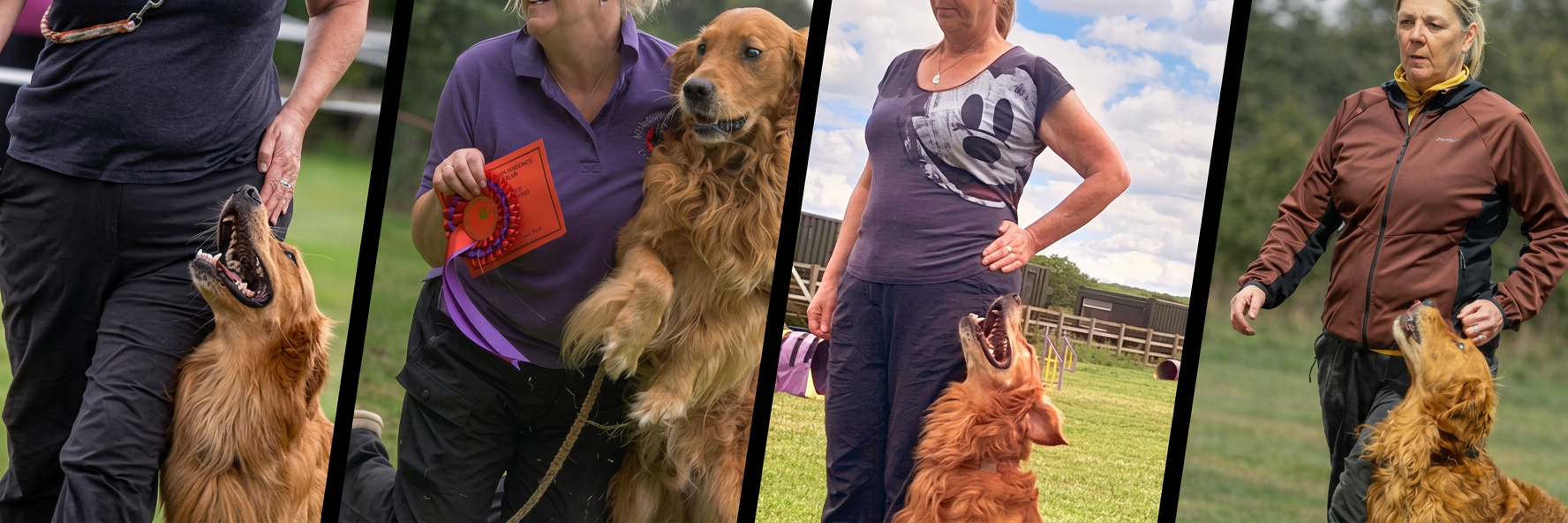
Berty and Jasper are not just championship competitors; they are authentic communicators. They don’t respond to who we’re pretending to be. They respond to what’s real. We can’t perform our way through it. They know who they are. And they know who we are. They function as mirrors for the human experience under pressure – instantly reflecting how we show up, and how our communication and presence impact those we teach, love, parent and lead”

Berty
Official Title: Hanans Golden Liberty @Wygulmut.
Role: Lead Demonstration Athlete & Behavioural Specialist.
- Core Architecture: Extroverted, highly sensitive, and ingerently driven by positive reinforcement.
- Operational Record: Fully qualified and actively competing at Championship level in RKC Competitive Obedience. Berty possesses a relentless work ethic and an intuitive desire to co-operate.
- Coaching Application: Berty functions as our primary live-action demonstration model. His high-energy and acute sensitivity make him the perfect asset for illustrating real-time behavioural feedback, split-second timing, and showing executives how clear, empathetic leadership drives a team’s motivation to perform.

Jasper
Official Title: Corneroak Golden Courage @Wygulmut.
Role: Senior Consultant & Communication Specialist.
- Core Architecture: Introverted. Deeply grounded, and true to himself.
- Operational Record: A veteran athlete approaching the conclusion of a distinguished competitive obedience career.
- Coaching Application: Jasper is our master communicator. As an introvert he doesn’t perform for applause – he responds strictly to genuine clarity and calm grounded presence. If a leader is inconsistent, or lacks internal alignment, Jasper mirrors it instantly, teaching clients to show up consistently, respond authentically, and powerfully command a room without shouting.

